
The Lotus Flower Carvings in Musatah
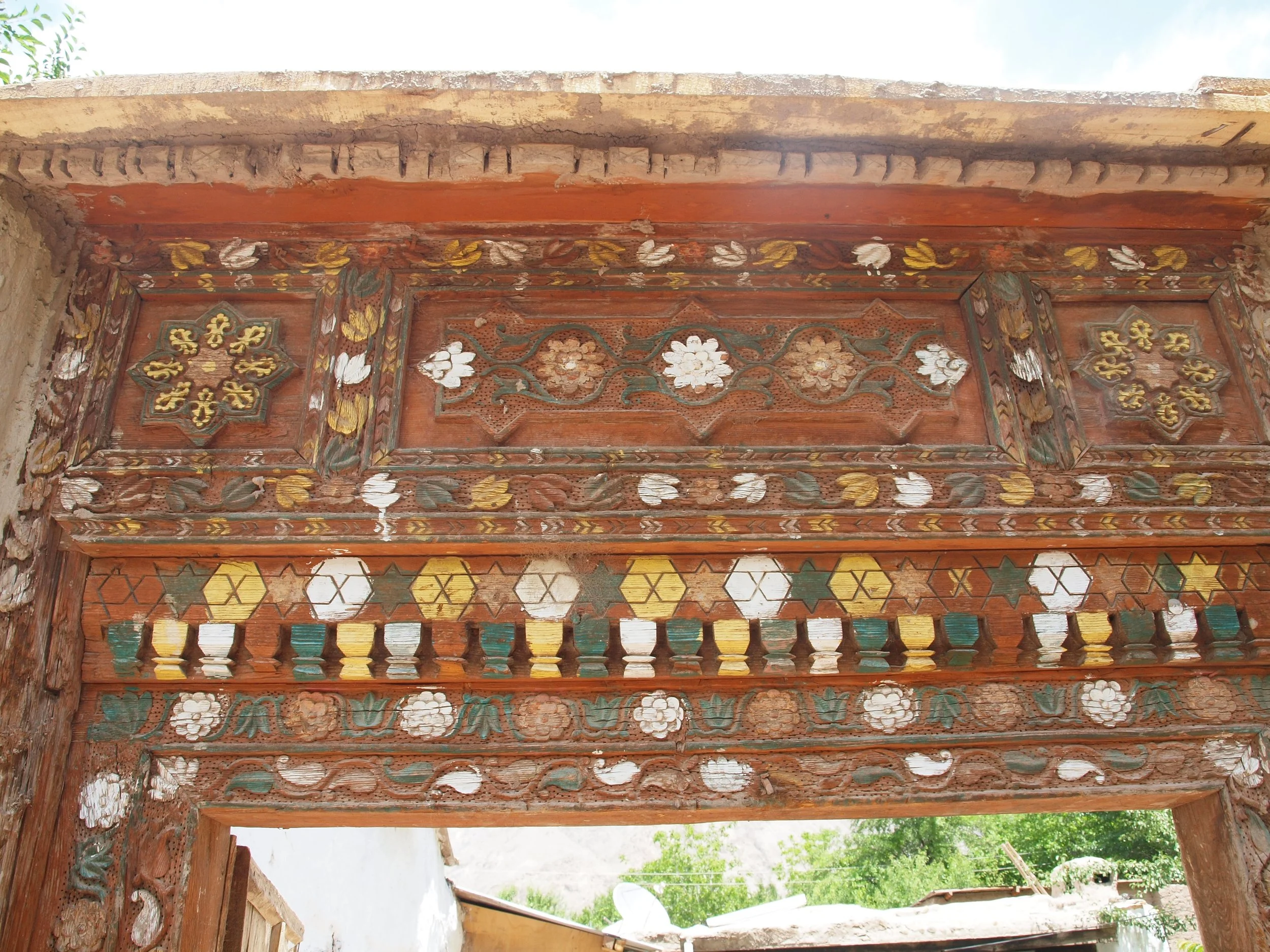
The Musatah house in Chitral Valley, a remote region of the Hindu Kush mountains, boasts unique architecture inspired by ancient Persepolis. A focal point of this Persian-style home is the intricate carvings of the lotus flower - a significant symbol in many cultures. Known as Nilofer in Persian, Kamal or Padma in Asian traditions, and tied to the ancient Persian goddess Anahita, the lotus represents divinity, fertility, health, and warfare. These lotus carvings, skilfully etched into the home's woodwork, attest to the enduring cultural significance of this sacred flower and its universal influence across diverse religions.
Musatah means flat in Persian, and there is a house in the remote valley of Chitral called Musatah (with flat ceilings). Chitral was formerly a princely state between the Hindu Kush mountains. This Musatah house belonged to a group called Rom and is situated in Romandur (where the Roms live) in the Reshun Valley of Chitral. Many people believe this room was the house of Baba Rom, the descendant of Baba Ayub (An Adventurer who came to Chitral from Khurasan in the 16th century).
The room's architecture resembles the Persian-style wooden works in this part of the world. The columns are inspired by the great ancient Persepolis or Takht-e-Jamshid city columns (514 BCE) of Iran, with two bullheads shaped at the top where they hold the roof. Different, beautiful Central Asian wood carvings enhance the beauty of the room.
When you enter the room, you will not take your eyes off the small wall niches covered with wood frames carved beautifully with the lotus flower. In Persian, the Lotus flower is called Nilofer, and in Asian tradition named Kanwal, Kamal, or Padma. This Persian symbol of the lotus flower is decorated with carvings all over the room. The lotus flower was once considered a symbol of divinity; most ancient cultures hold it sacred and symbolic. According to Ross Murfin, a symbol is something that, although it is of interest in its own right, stands for or suggests something more extensive and more complex—often an idea or a range of interrelated ideas, attitudes, and practices.
Anahita's mythologies in different religions showcase the remarkable adaptability and cultural assimilation of the lotus flower symbol. In Hinduism, the lotus is associated with the goddess Lakshmi, representing purity and divine beauty. In Buddhism, the lotus represents enlightenment and spiritual growth, as the Buddha is often depicted seated on a lotus throne. This multifaceted significance of the lotus reflects its enduring appeal and universal symbolism across diverse cultures throughout history.
The ancient Aryan religion, shared by Indo-Iranians, closely resembles Indian Hinduism's polytheism. Anahita, revered in Iranian as Aredvi Sura ("moist and strong") and in Indo-Aryan as Sarasvati, symbolizes water and rivers. In Sanskrit, known as Anahita, she embodied fertility, life, wisdom, and healing.
Zoroastrianism, a monotheistic faith, incorporates the Aryan goddess Anahita. While it primarily worships Ahura Mazda as the creator god, Anahita is revered as the embodiment of the heavenly river, the source of all waters.
In Buddhism and Hinduism, the Lotus flower had symbolic importance and was believed to be an iconographical value within the microcosm and macrocosm. Lotus has been depicted in many Buddhist stupas and has much significance in modern Hinduism, where the god and goddess are in some way associated with the Lotus. When Islam emerged in Central and South Asia, the symbol of the Lotus became only a decorative motif. Somehow, some Persian-origin people’s nexus with their pre-Islamic culture did not allow them to completely vanish the chattels of divinity from this symbol. In many cultures and religions, the pattern and number of lotus petals express different dogmas.
Similarly, the Lotus flower carvings in the Musatah are used only for decorative motifs; only a little evidence was found to call it a divine antiquity. The pattern of the design of the lotus flower of this Musatah house resembles the Persian design of the Lotus. The Indian and late Central Asian motifs differ from the old Persian depiction of the lotus flower, where the petals are roundish and can be found in Persian, and some Buddhist inscriptions. The decorative carvings and columns of Musatah are a little glimpse of the decorations in the great Achaemenid city of Persepolis. The frame all over the city was symbolised by lotus flowers with 12 petals and bullhead columns implying royalty, power, and strength. These architectures are still an enigma for many researchers; they are one of the remaining mysteries of the ancient civilisations in these parts of the world.
