
What an Elder’s Hands Remember
On learning, listening and the fragile continuity of Shu (hand woven woollen cloth)
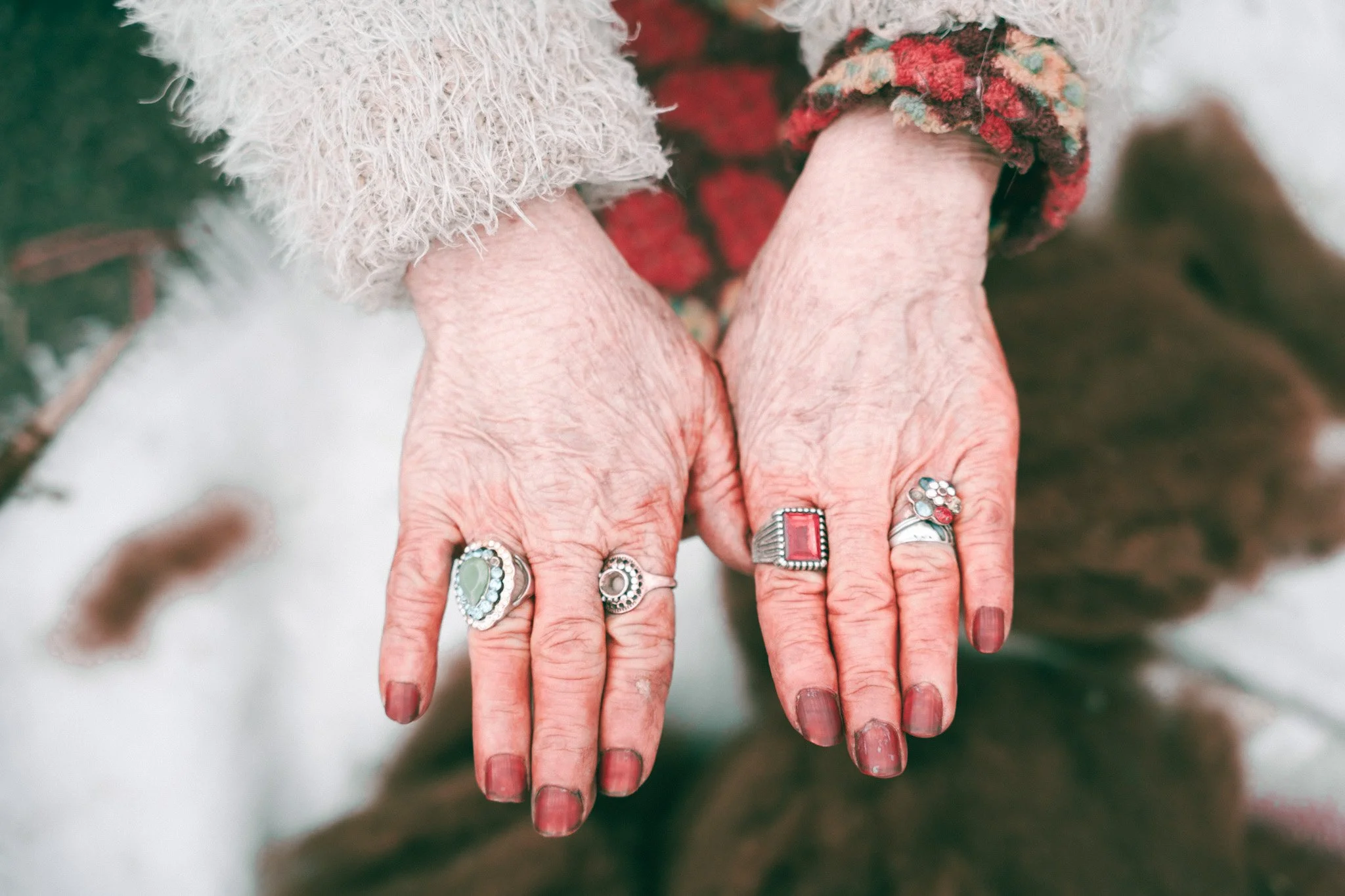
An elder’s hands often know before words arrive.
They know how wool should feel after washing, how tightly a thread must be spun, how a loom sounds when the tension is right. They know when cloth is ready for felting, when it needs more water, more pressure, more time.
This knowledge is precise, but it is rarely written down.
It has been learned through repetition: by watching a mother, an uncle, a neighbour; by sitting beside a loom through winter; by making mistakes and being corrected; by returning to the same material until the body begins to remember.
In Chitral, the making of Shu has long depended on this kind of learning. Knowledge passes from person to person, not as a fixed lesson, but through presence. A younger maker watches how an elder holds the fibre, listens to the rhythm of the loom, and slowly learns to recognise what cannot be easily explained.
To document this knowledge, we first have to listen.
Listening means allowing time for stories to unfold. It means noticing pauses, gestures and silences. Sometimes the most important part of a conversation is not the sentence spoken, but the hand that reaches for the wool to demonstrate what language cannot carry.
An elder may describe the kind of sheep that once produced the strongest fleece, the stream where wool was washed, or the winter when every household wove its own cloth. These memories hold more than technique. They contain histories of work, family, ecology and exchange.
But this continuity is becoming fragile.
Fewer young people are learning to spin, weave and felt by hand. Many leave the valleys for education or employment. Machine-made cloth is faster and cheaper, while the labour behind handmade Shu is often poorly valued. As elders grow older, entire bodies of knowledge risk disappearing without an apprentice to receive them.
This is why safeguarding Shu cannot mean recording a process and placing it in an archive.
A video can preserve a gesture, but it cannot keep a practice alive on its own. Continuity requires relationships: elders being recognised and paid as teachers, young people having time and reason to learn, and communities seeing this knowledge as a source of dignity and possibility.
At Làlgar Foundation, we understand learning as something shared across generations. The elder is not simply a source of information, and the young person is not an empty vessel. Both bring experience, curiosity and imagination to the encounter.
The future of Shu may not look exactly like its past. It may enter new forms, new spaces and new markets. But any future must remain connected to the hands that carried the knowledge this far.
When an elder places wool into a younger person’s hands, they are passing on more than a skill.
They are passing on a way of paying attention.