
Where Cloth Remembers
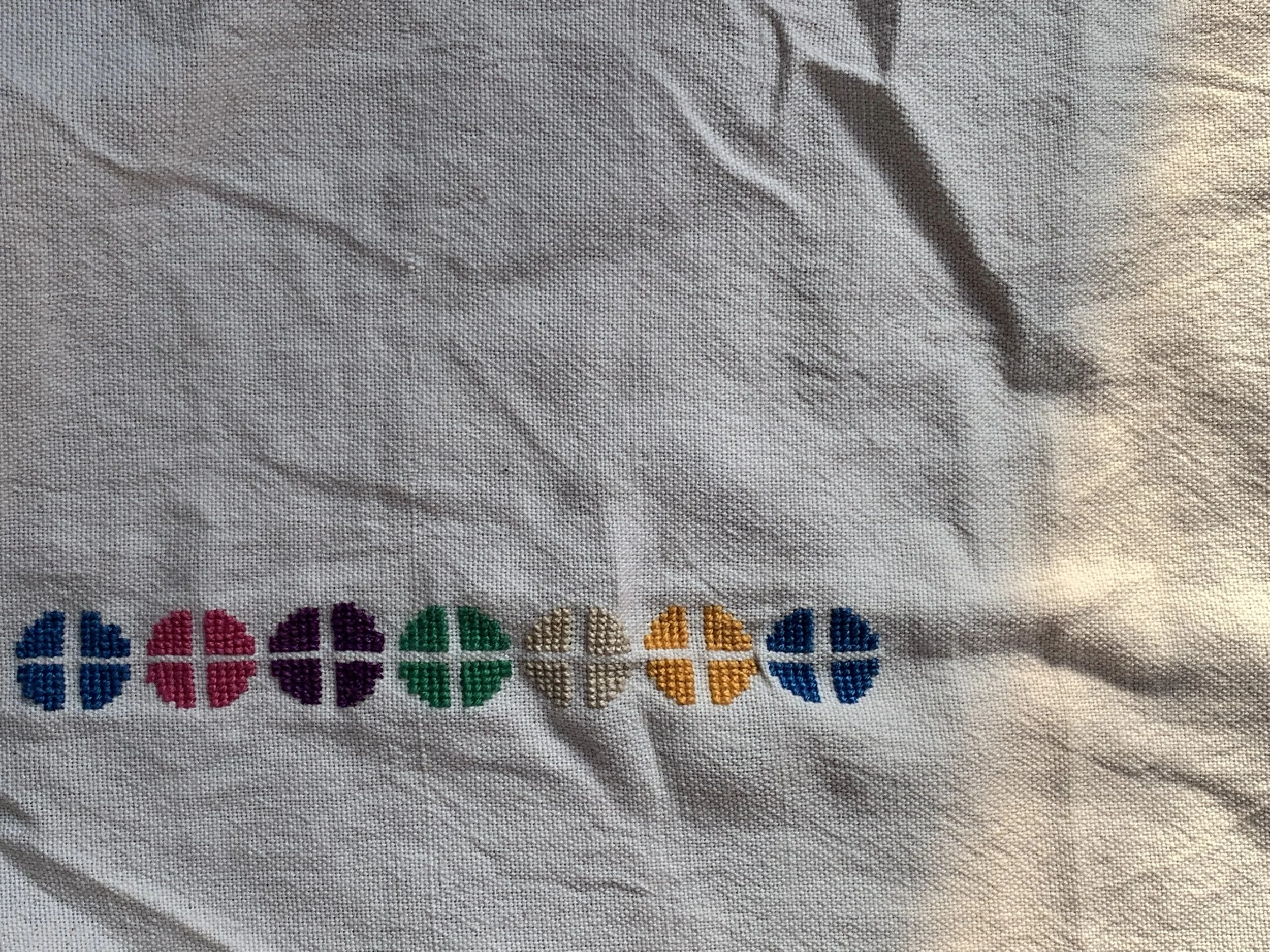
Textiles mend. They gather the broken parts and hold them close.
A selvedge opens onto a multitude: histories caught at the edge, frayed inheritances, old wounds rising again through the weave.
In the midst of uncertainty, I run my hands slowly over an old T-shirt. The cotton has thinned with time, softened by the body that once inhabited it. I wonder if I am being sentimental. Or whether remembrance is itself a form of prayer.
My fingers move through its roughness, through the small entanglements of memory: contradiction, tenderness, absurdity, grief. Cloth keeps these things without asking them to resolve. It allows opposing truths to occupy the same surface.
Then there is the light.
It passes gently through the worn places, illuminating what use has made fragile. Within the texture is something like a coded life story: illegible, intimate, full of what has been lost and what has survived. The cloth does not repair by making the wound disappear. It repairs by recognising it. By covering it as one might cover a bruise. By offering warmth, pressure, protection.
Perhaps this is why cloth remains so close to us. It accompanies the body through its most ordinary and most sacred moments. It absorbs heat, sweat, scent. It carries the trace of touch. Long after a person has gone, a garment can return the atmosphere of their presence: the closeness of a shoulder, the shape of a room, the faint geography of intimacy.
Sometimes a smell returns before the memory itself. Wool dampened by rain, cotton warmed against skin, the faint trace of soap left in a collar. Suddenly, I think of him. Not as an image, but as a sensation: a nearness the body remembers before the mind can name it. Longing arrives this way, without permission. It settles into the fabric of an ordinary moment and makes the absent briefly present again. I begin to understand memory not as something stored safely in the past, but as something porous, fugitive, alive—carried in scent, touch, texture, in the smallest folds of cloth.
There is something almost celestial in this exchange between cloth and body, between what can be held and what cannot. Textiles mediate between the visible and the invisible, the known and the unknowable. They become companions to our changing lives, repositories for feelings we have no other language for.
And when a cloth appears to have reached its end—when it has been worn through, torn, patched, inherited, abandoned—another possibility begins.
A new life emerges from the break.
The tear becomes an opening. The repair becomes part of the pattern. What was once considered damaged begins, quietly, to speak.